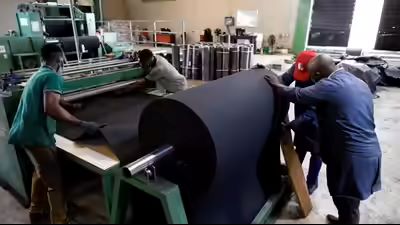
The Indian rubber industry is facing a severe cost increase, primarily driven by geopolitical tensions in West Asia. This conflict has triggered price hikes of 30% to 40% for key oil-linked materials like carbon black, synthetic rubber, and processing oils since the conflict began. Natural rubber prices have also risen by about 10%. This price rise is made worse by India's heavy reliance on imports for its rubber supply. About 40% of the nation's natural rubber is imported. Synthetic rubber imports are even higher, making up nearly 48% of domestic demand in FY25, with total imports up about 17% year-on-year in FY24-25. This heavy dependence makes the sector highly vulnerable to global price swings and supply chain issues.
Beyond higher raw material prices, shipping goods has become a major burden. Shipping lines have added high surcharges, costing an extra $2,000 for 20ft containers and $3,000 for 40ft containers. Freight costs have essentially doubled, made worse by higher insurance premiums due to increased shipping risks in conflict zones. These rising shipping costs put heavy strain on manufacturers, especially those exporting, reducing already tight profit margins.
India's heavy reliance on imports is a structural weakness that global events easily expose. In FY25, imports made up about 43% of total rubber use, up sharply from just 10% in 2010. This growing reliance, especially for synthetic rubber derived from petrochemicals, shows an ongoing gap between what the country makes and uses. Domestic natural rubber production is expected to reach 8.82 lakh tonnes in FY25, but consumption is forecast at 14.86 lakh tonnes, leaving a deficit of over 6 lakh tonnes. This gap requires large import volumes, making the industry a direct channel for global price swings and supply chain problems.
India's manufacturing sector, a major user of rubber products, shows slowing growth. The HSBC India Manufacturing PMI fell to 53.8 in March 2026 from 56.9 in February, signaling a slowdown in growth. Meanwhile, the car industry, a main driver of rubber demand, forecasts sales growth of 3-6% for 2026-27 and is expected to reach $300 billion by 2026. The outlook is cautiously optimistic, influenced by government policies and changing consumer tastes for EVs and SUVs. However, rising raw material and production costs could affect pricing and what consumers can afford.
The current cost surge from geopolitics is not just a temporary issue but a sign of deeper structural problems. India's heavy import dependence, especially for oil-derived synthetics and much of its natural rubber, makes it highly vulnerable to global price swings and weak supply chains. The risk of low-cost tyres being dumped from China, following higher US tariffs on Chinese goods, poses a direct risk to local profit margins and market share. Also, it takes 6-7 years for new domestic rubber plantations to mature, so increasing local production quickly isn't possible, keeping reliance on imports. For the thousands of MSMEs that form the backbone of the industry, these rising costs and potential order cancellations could be critical. Past price swings in natural rubber, which saw domestic prices hit 15-year highs around Rs.250/kg in H1 FY25 and global prices jump over 60% in the nine months to August 2024, show how risky this reliance is.
Despite current challenges, the Indian tyre industry expects continued growth, with sales forecast to rise by 7-8% in FY26, mainly supported by demand from vehicle replacements. However, whether this growth continues depends on handling changing input costs and possible regulatory shifts. While analysts forecast growth, the impact of rising raw material prices, along with potential higher compliance costs for new emission and safety standards, presents a real risk. The industry's ability to absorb these rising costs without significantly affecting prices or demand will be a key factor for its future.