|
|
|
|
 |
|
Mar 04, 2026
|
|
| |
|
Sri Lanka's rubber industry at a crossroads amid economic and structural stress
|
| |
|
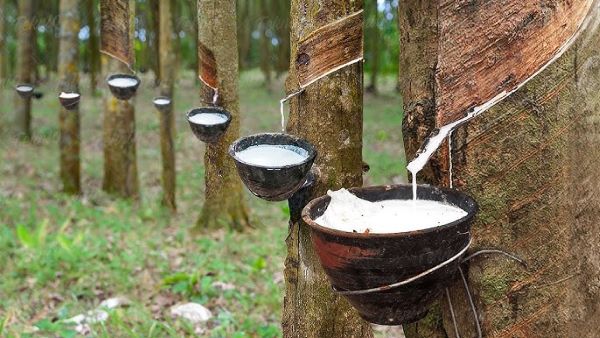
Sri Lanka's rubber industry entered 2025 under mounting pressure from weakening global demand and policy uncertainty to persistent disease outbreaks, labour shortages and rising production costs. By 2026, a further 15% wage increase intensified existing cost pressures, raising concerns about the long term viability of rubber plantations.
While the sector has long played a strategic role in export earnings and domestic manufacturing, industry leaders now warn that without timely intervention, rubber risks becoming economically unviable across large parts of the country.
Export performance in 2025 reflected these strains. Rubber-based export earnings declined to around USD 945 million, down from approximately USD 1.01 billion in 2024, marking a contraction of about 5-6%. The impact was particularly visible in tyre and value-added manufacturing segments, especially due to tariffs imposed by the United States, Sri Lanka's largest single rubber export market, accounting for roughly one-third of total rubber export revenue. Sri Lanka's rubber sector operates in a highly competitive global market where producers in countries such as Thailand and Vietnam, along with emerging producers in Africa, enjoy lower production costs and larger economies of scale. India, meanwhile, is aggressively expanding its rubber based manufacturing capacity. While Sri Lanka continues to command a premium for niche products such as crepe rubber and high quality centrifuged latex, these advantages are narrowing as competitors scale up production and integrate supply chains more efficiently. A major domestic shock came with the removal of the Simplified VAT (SVAT) system, which significantly affected producer prices.
|
|
|
|
|
| |
|
|
|
 |
|
|
|
© Copyright 2026.
All India Rubber Industries Association. All rights reserved. |
|
|
|
|
|
|
|
|
© Copyright
All India Rubber Industries Association. All Rights
Reserved. |
|
|
|