There's a hesitancy among major suppliers of fluoroelastomers to add capacity, something that could be an issue with 3M Corp.'s plan to leave the industry by the end of 2025.
That's understandable, given the regulatory environment surrounding the potential ban of PFAS materials in the European Union and elsewhere. That makes investing in FKMs and fluoropolymers a tricky proposition.
"Other suppliers, while they may have plans to increase capacity to make up for 3M leaving the market, it takes time, No. 1, to get those operations up and running", said Ryan Fleming, director of materials technology, corporate technology and innovation for Freudenberg-NOK Sealing Technology. "And No. 2, they're hesitant to invest in FKM and PTFEs and things like this. If it ends up being banned, that's a zero dollar investment right there".
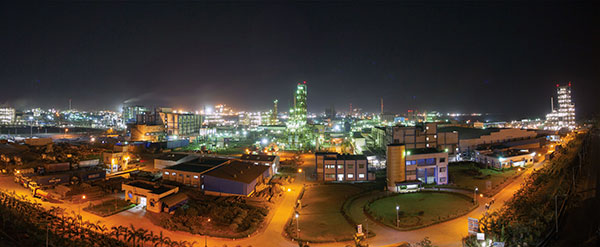
But India's Gujarat Fluorochemicals Ltd.(GFL) is taking the opposite approach. It's leaning into its knowledge of fluorine chemistry and history in manufacturing various lines of fluoropolymers to go all in on the production of its line of Fluonox-brand fluoroelastomers.
From jumping into the FKM market in 2017, GFL took its time to make sure its product was established but, once it was, growth came quickly as has the addition of new capacity, according to Kapil Malhotra, head of GFL's fluoropolymers business.
GFL started modestly with one manufacturing line for fluoroelastomers installed at its complex in Dahej, India. Malhotra said it took roughly 18 to 24 months to stabilize the product and begin getting market approvals for the Fluonox lines for such applications as automotive and aerospace.
That brought the Indian firm to 2019, and COVID hit in 2020. But about six months into the pandemic, the supplier started to see pent-up demand from the market start rising.
"Once we were approved by customers, demand started going up and we felt that one line was not sufficient to satisfy the market", Malhotra told Rubber News in an interview from his office in Noida.
Toward the end of 2020, GFL decided to go forward with two additional fluoroelastomer lines, which were commissioned in the first quarter of 2022. And within six weeks, the firm sold out the volume from the new capacity as demand in the market was outstripping the ability of the existing suppliers to keep up, he said, adding that his firm's experience in related areas helped as well.
"We stepped in at the right time", Malhotra said. "Suppliers couldn't meet extra demand. So customers knew with their experience in fluoropolymers that GFL is a reliable supply chain partner. Once we commit to a customer we always try to fulfill the demands of the customer. So that past also helped us to get a footing into these markets".
With that success, GFL moved forward with adding more capacity for its Fluonox FKMs. It decided sometime in the second quarter of 2022 to invest in two more lines and had that capacity up and running in this year's first quarter.
That gives the producer almost five times the amount of capacity from when it started, he said, and they don't expect the new volume to last long either. GFL is seeing some rising demand for its fluoroelastomers from what it calls new "sunrise sectors", such as electric vehicle batteries and green hydrogen. More new business will come from non-automotive applications, especially in oil and gas.